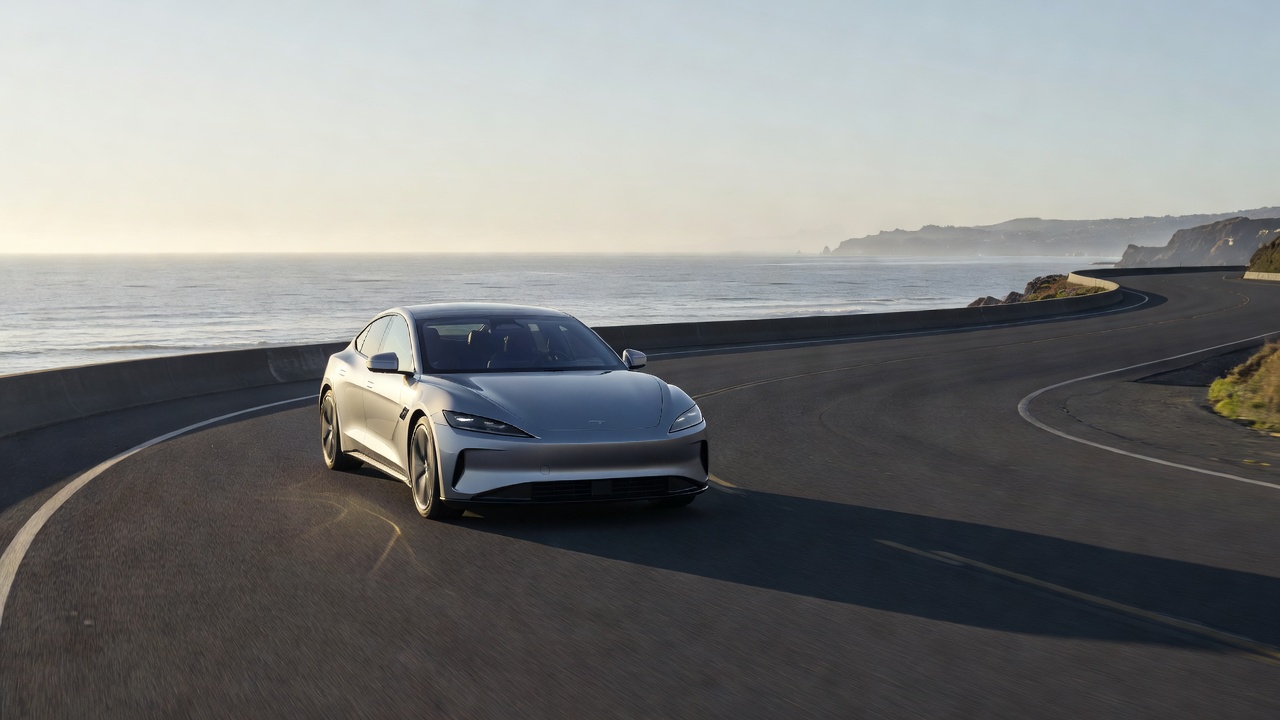
What is one-pedal driving?
In an EV, the electric motor can act as a generator. When you ease off the accelerator, the car can use this "regenerative braking" to slow down while sending energy back into the battery. With a strong enough regen setting, the car can slow all the way to a stop without you touching the brake pedal — that's one-pedal driving.
The friction brakes are still there and still work normally. You'll always use them for emergency stops or when you need more deceleration than regen provides.
Why it's perfect for the city
- Less effort: fewer pedal swaps in stop-start traffic reduce fatigue.
- More range: energy that would be lost as heat is partly recovered.
- Less brake wear: pads and discs can last much longer — though occasional firm braking keeps discs free of corrosion.
- Smoother progress: it encourages you to read the road ahead.
How our top 5 cars do it
MINI Cooper Electric
Offers selectable recuperation levels and an adaptive mode, with the strongest setting allowing near one-pedal operation in traffic.
Renault 5 E-Tech
Steering-wheel paddles step through regeneration levels on the move, with the strongest setting enabling one-pedal-style driving.
Hyundai Inster
Paddles adjust regen through several levels, and Hyundai's i-Pedal mode brings the car to a complete stop without the brake pedal.
Fiat 500e
Selecting "Range" mode activates strong regeneration for one-pedal driving. "Sherpa" mode adds further efficiency measures when charge is low.
Kia EV3
Kia's i-Pedal 3.0 allows one-pedal driving at any regen level, and the Smart Regenerative System can adapt regen automatically using radar and navigation data.
Tip: brake lights still illuminate when regenerative deceleration is strong enough, so drivers behind you are warned.
Learn it in a week
- Day 1–2: Pick a medium regen level and practise lifting off early as you approach junctions.
- Day 3–4: Switch to the strongest setting in a quiet area. Feather the accelerator rather than lifting off suddenly.
- Day 5: Use it in light city traffic, aiming to stop smoothly at lights without touching the brake.
- Day 6–7: Try it in rush hour. Notice how your efficiency readout improves.
When not to rely on it
- On icy or very slippery roads, strong regen on the driven wheels can reduce stability — use a gentler setting.
- When the battery is full (or very cold), regen may be limited, so the car slows less than usual. Be ready to brake.
- In emergencies, always use the brake pedal firmly.