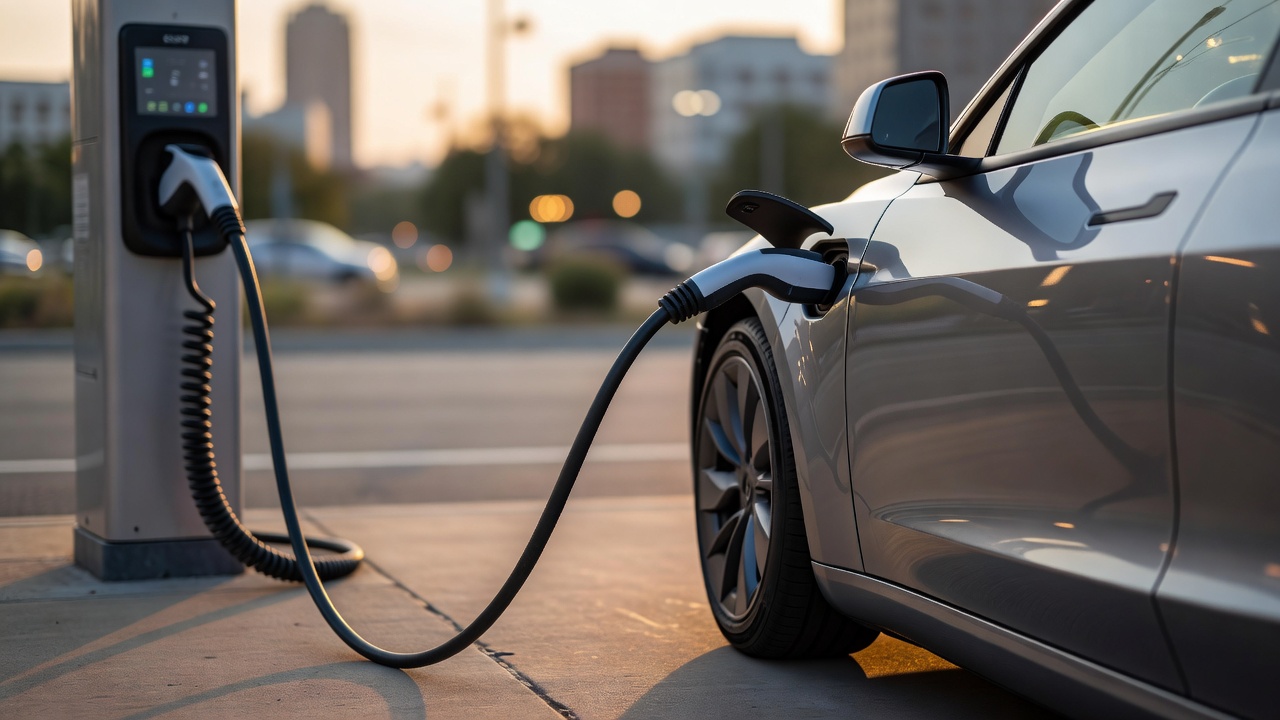
Start with how much you actually drive
An efficient city EV like the Fiat 500e or Renault 5 typically uses around 14–16 kWh per 100 km in town. If you drive 40 km a day, that's roughly 6 kWh daily — or about 40 kWh a week. In practice, that means one or two charging sessions per week, not a nightly ritual.
Your five main charging options
1. On-street residential chargers
Many cities now install chargers in lampposts, bollards or kerbside posts. In the UK, operators such as Ubitricity and char.gy provide thousands of slow residential points, usually at 3–7 kW. Plug in overnight and you'll typically add 30–50 kWh — enough for a week of commuting. Check with your local council: many accept requests for new chargers on your street.
2. Destination charging
Supermarkets, gyms, cinemas and retail parks increasingly offer 7–22 kW AC or 50 kW+ DC chargers. Plugging in during your weekly shop can cover most or all of your needs.
3. Workplace charging
Ask your employer. Many businesses offer free or discounted charging as a staff benefit, and some governments have offered grants to help fund workplace installations.
4. Rapid and ultra-rapid hubs
DC hubs (50–350 kW) can take a city EV from 10% to 80% in roughly 25–35 minutes. They cost more per kWh, but one weekly session while you grab a coffee is a perfectly workable routine.
5. Shared or cross-pavement home charging
If you park outside your terrace house, some councils now permit approved cross-pavement cable channels. In apartment blocks, ask the building manager about shared charging in the car park.
The best routine combines one cheap, slow source (street or workplace) with a rapid hub as a backup.
Know your rights as a renter or flat owner
Rules vary by country and region. In some places, laws give tenants and condominium owners the right to request a charger installation, provided they meet safety and cost requirements — California, for example, has had such protections for several years. In the UK, building regulations now require EV charging provision in many new residential developments with parking. Always put requests in writing and offer to cover installation costs where required.
Apps that make it easy
- Zapmap — the UK's most comprehensive charger map, with live availability and pricing.
- PlugShare — a global, community-driven map with user reviews and photos.
- Built-in navigation — the Renault 5's Google Maps integration and the Kia EV3's route planner can include charging stops automatically.
Keeping costs down
- Favour slow AC charging, which is usually cheaper per kWh than rapid DC.
- Look for charger subscriptions if you regularly use one network.
- Don't charge to 100% on rapid chargers — speeds drop significantly above 80%.
- Use pre-conditioning in winter so the battery is warm and charges faster.
Charging etiquette
Move your car once charging is complete, never unplug someone else's vehicle, and report faulty chargers via the operator's app. Good etiquette keeps shared infrastructure working for everyone.